Ulrich Lange · 18 September 2026
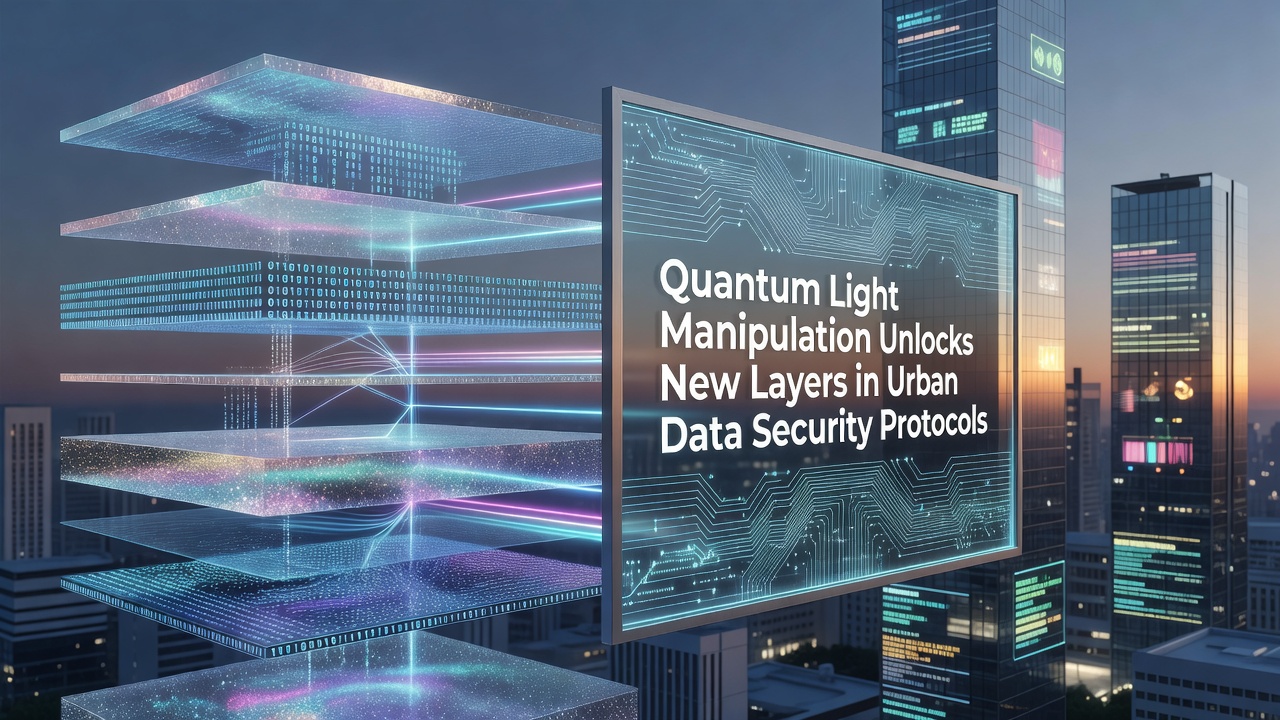
Quantum Light Manipulation Unlocks New Layers in Urban Data Security Protocols
Quantum light manipulation involves precise control over photon properties such as polarization, phase, and entanglement to create communication channels that resist interception, and researchers have applied these methods to urban data networks where high-density infrastructure demands robust protection. Cities worldwide integrate sensors, traffic systems, and public services into interconnected grids, which makes traditional encryption vulnerable to advanced computational threats, while quantum approaches add physical-layer safeguards that detect any eavesdropping attempt immediately through disturbance of quantum states.
Core Principles Behind the Technology
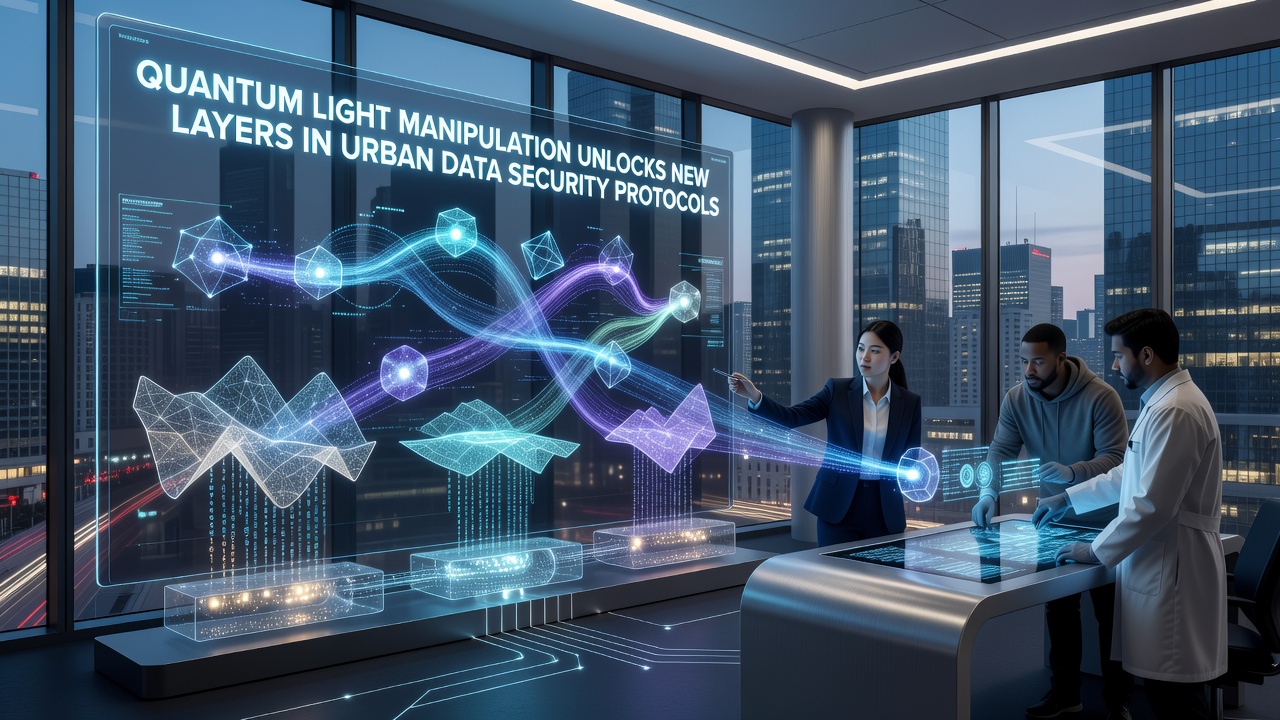
At the foundation lies quantum key distribution protocols that use single-photon sources and detectors to generate shared keys between nodes, and manipulation of light beams allows encoding information in ways classical systems cannot replicate without altering the signal. Teams working on these systems combine laser stabilization with nonlinear optical materials to produce entangled photon pairs on demand, which enables verification of secure links across metropolitan fiber networks without relying solely on mathematical complexity.
Urban environments present unique challenges because signal attenuation from buildings and electromagnetic interference can degrade performance, yet adaptive optics and error-correction algorithms compensate by adjusting beam paths in real time. Data from field trials indicate transmission distances exceeding 50 kilometers remain viable when modulators maintain coherence, and this capability supports integration with existing 5G and fiber backbones in major population centers.
Implementation in City-Scale Networks
Municipal authorities in several regions have begun pilot programs that embed quantum light sources into data centers and roadside units, creating layered security that combines classical encryption with quantum authentication. One deployment in a European capital routes traffic-management data through photon-based channels, and operators report that any physical tap on the fiber triggers immediate alerts because the quantum state collapses upon measurement.
September 2026 marks the scheduled rollout of an expanded testbed in North America, where government-funded laboratories will connect multiple municipal agencies through a shared quantum backbone, and preliminary models project a 40 percent reduction in successful intrusion attempts compared with standard protocols. Equipment suppliers have developed compact modules that fit within standard rack spaces, allowing gradual upgrades rather than wholesale replacement of legacy systems.
Supporting Research and Standards Development
Institutions across different continents contribute to protocol refinement, and the National Institute of Standards and Technology maintains reference frameworks that guide hardware certification for quantum devices. National Institute of Standards and Technology guidelines outline performance benchmarks for photon detectors and source stability, while parallel efforts in Australia focus on integration with satellite links that extend coverage beyond terrestrial limits. Observers note that consistent calibration across vendors remains essential, since variations in laser linewidth or detector efficiency can introduce vulnerabilities that attackers might exploit.
Academic groups publish results from controlled experiments showing that polarization-encoded qubits maintain fidelity above 95 percent after propagation through 20 kilometers of standard single-mode fiber, and these figures improve further when dispersion-compensating modules are added. Such measurements provide the quantitative basis for scaling deployments, and industry consortia use them to draft interoperability specifications that municipalities can reference during procurement.
Operational Considerations and Integration
Maintenance crews require training on handling cryogenic detectors and alignment procedures, because even minor temperature fluctuations shift phase relationships and raise error rates. Cities that have adopted the technology schedule quarterly recalibrations, and automated monitoring software flags deviations before they affect key generation rates. Power consumption for quantum transmitters stays modest relative to conventional servers, yet backup cooling systems add to infrastructure costs that planners must factor into budgets.
Hybrid architectures prove most practical because they allow legacy equipment to coexist with new quantum layers, and software-defined networking controllers manage routing decisions that prioritize quantum-secured paths for sensitive traffic. This layered approach means an organization can protect critical databases while permitting lower-risk applications to use standard encryption until full migration occurs.
Conclusion
Quantum light manipulation supplies physical mechanisms that complement existing cryptographic methods, and ongoing standardization work plus scheduled 2026 expansions position the approach for broader adoption in urban settings. Continued measurement campaigns and cross-regional collaboration supply the data needed to refine hardware tolerances and protocol efficiency, which in turn supports reliable deployment across diverse city infrastructures.