Ulrich Lange · 4 September 2026
Optical Fiber Sensors Track Shifting Soil Conditions in Agricultural Fields
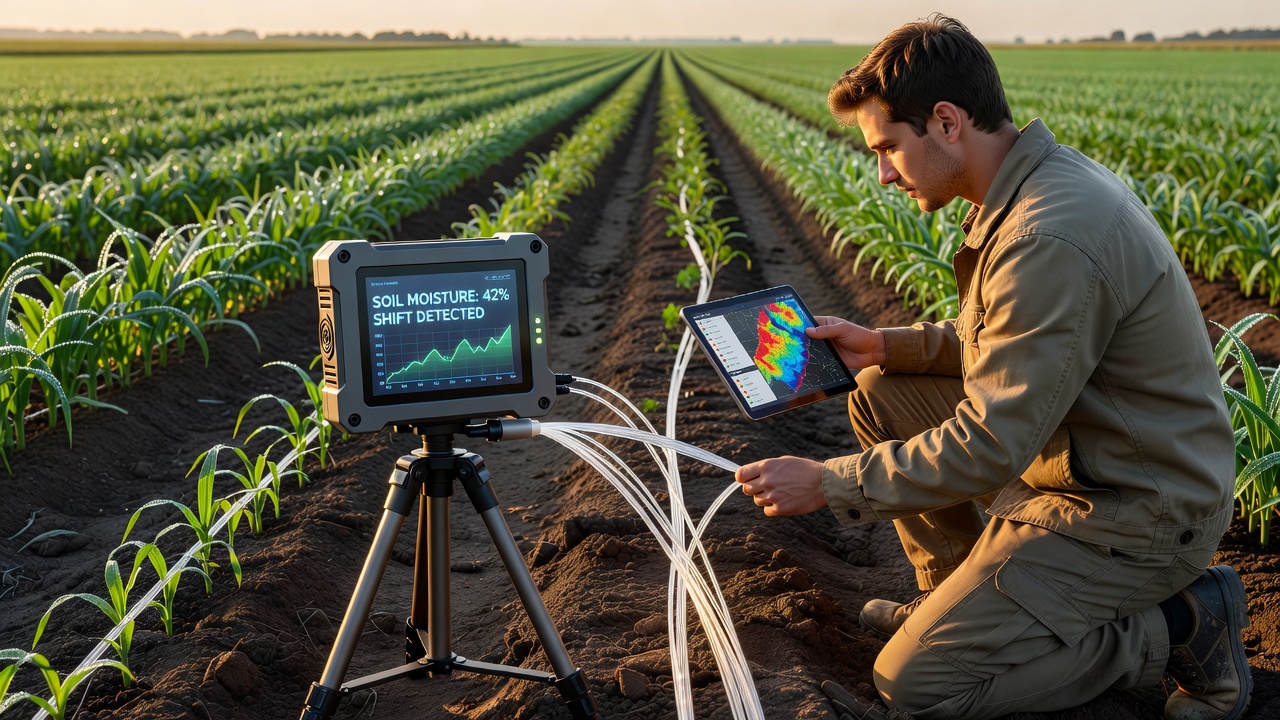
Optical fiber sensors have emerged as a precise tool for monitoring dynamic changes in agricultural soil, capturing data on moisture fluctuations, compaction, and lateral shifts caused by weather events or mechanical tillage. These sensors operate by transmitting light through thin glass strands embedded with Bragg gratings or distributed sensing elements that respond to physical stress and temperature variations along their length. When soil moves or its water content changes, the fibers register minute alterations in light reflection patterns, which monitoring systems convert into actionable measurements without requiring extensive excavation.
Core Technology Behind the Sensors
Researchers at institutions focused on applied photonics developed these systems to withstand harsh field environments while delivering continuous readings over kilometers of cable. The fibers detect strain through shifts in wavelength, allowing operators to map soil displacement in three dimensions when multiple cables are arranged in grids or vertical arrays. Temperature compensation occurs automatically through dedicated reference channels, which separate thermal effects from mechanical ones and produce reliable data even during rapid weather swings. Farmers and agronomists integrate the output with GPS coordinates to generate layered maps that highlight zones of subsidence or water accumulation before visible surface damage appears.
Deployment Patterns in Modern Farming Operations
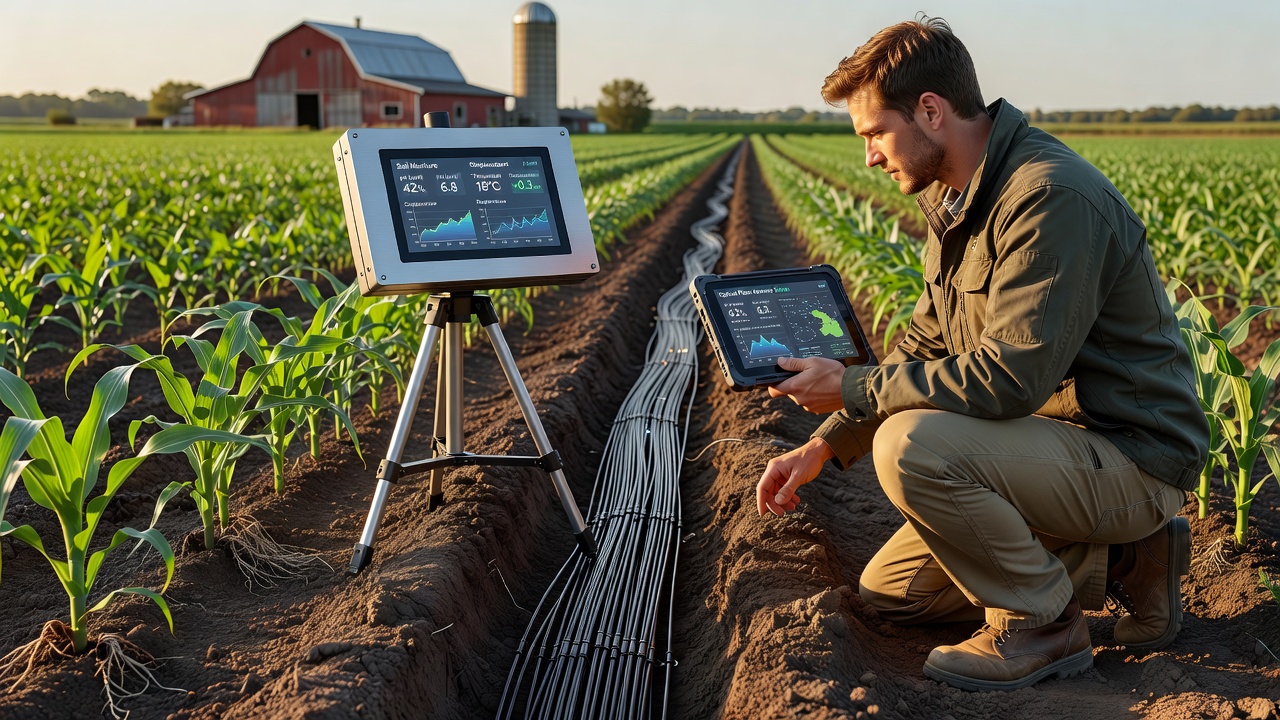
Installation typically begins with shallow trenches or direct burial at depths ranging from 30 to 150 centimeters, depending on crop root zones and expected tillage depth. Once in place, the cables connect to interrogator units housed in weatherproof enclosures that log readings at intervals as short as one minute. Data flows to cloud platforms where algorithms compare current values against historical baselines, flagging anomalies such as sudden increases in shear stress that precede erosion gullies. In regions with heavy clay soils, sensors have recorded lateral movements exceeding several millimeters per day following intense rainfall, information that helps schedule drainage improvements or adjust irrigation schedules.
One study conducted across Midwestern test plots revealed that fiber networks identified compaction layers forming beneath tractor paths weeks earlier than traditional penetrometer surveys. Operators used this lead time to modify equipment routes and reduce further densification. Similar installations in Australian grain belts tracked moisture migration through sandy profiles during drought cycles, correlating fiber readings with yield variations recorded at harvest.
Integration With Broader Precision Agriculture Systems
Optical fiber outputs feed directly into variable-rate application maps that guide fertilizer spreaders and seed drills. When combined with satellite imagery and drone-based multispectral scans, the ground-truth measurements from buried cables improve the accuracy of soil models used for water balance calculations. Government agencies such as those tracking national soil health metrics have begun incorporating fiber-derived datasets into long-term monitoring programs, noting that continuous coverage reduces sampling costs compared with repeated manual coring. According to figures released by the USDA, farms adopting sensor networks reported measurable declines in erosion incidents during monitored seasons.
European trials have focused on vineyards and orchards where slope stability matters for both yield and machinery safety. Cables installed along contour lines detected subtle creep before it affected vine root systems, prompting targeted terracing work. In Canada, researchers documented how fiber readings helped calibrate models predicting frost heave in northern fields, allowing earlier decisions on cover crop selection. These examples illustrate how the technology scales from smallholder plots to commercial operations spanning hundreds of hectares.
Developments Scheduled for September 2026
A coordinated multi-site demonstration is set to launch in September 2026 across test farms in three climate zones, expanding the sensor arrays to include simultaneous monitoring of greenhouse gas fluxes at the soil surface. Project leads plan to release standardized protocols for data formatting so that equipment manufacturers can embed fiber compatibility into next-generation tractors and harvesters. Preliminary reports indicate that calibration routines refined during the preceding year will further reduce false positives triggered by temperature spikes, increasing overall system reliability.
Conclusion
Optical fiber sensors continue to supply detailed, real-time information on subsurface conditions that influence crop performance and land stability. Their ability to operate across extended distances with minimal maintenance supports wider adoption in precision management programs. As integration with existing farm machinery advances and standardized reporting formats emerge, the technology provides consistent measurements that complement satellite and aerial data sources. Ongoing field programs through 2026 and beyond will clarify optimal placement strategies and cost thresholds for different soil types and cropping systems.