Kai Krause · 30 October 2026
Light-Based Analysis Techniques Reveal New Insights into Ancient Material Compositions During Restoration Projects
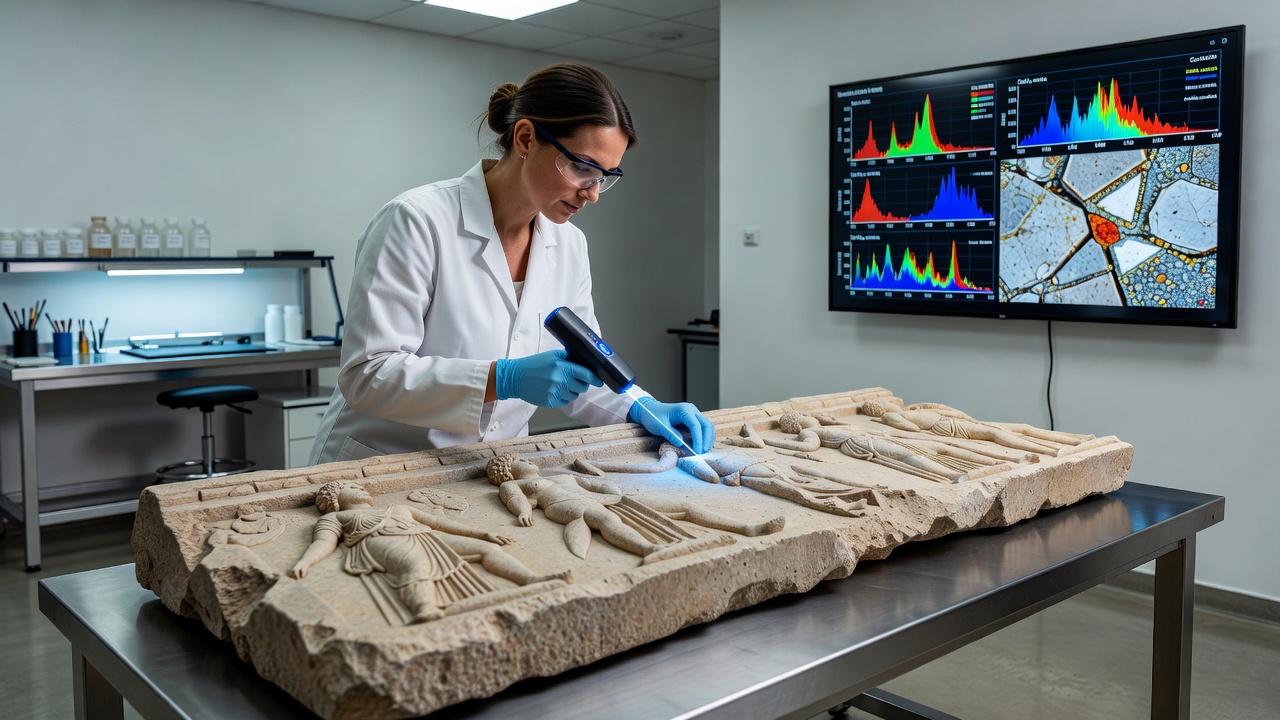
Light-based analysis techniques have transformed how conservators examine ancient artifacts, allowing non-destructive mapping of material layers that traditional methods often overlook. Teams apply hyperspectral imaging and Raman spectroscopy to reveal pigment sources, binding agents, and degradation patterns hidden beneath surface restorations, and these approaches have accelerated during major projects completed through October 2026.
Core Methods Driving Current Discoveries
Portable Raman spectrometers deliver precise molecular fingerprints by directing laser light onto sample areas, then recording scattered wavelengths that identify compounds such as vermilion or azurite without removing any material. Hyperspectral cameras capture hundreds of narrow spectral bands across visible and near-infrared ranges, producing data cubes that highlight variations in organic binders and later overpaints. Researchers combine these tools with laser-induced breakdown spectroscopy to generate elemental maps at micrometer scales, and the combined datasets help distinguish original medieval glazes from nineteenth-century retouchings.
Case Study from European Heritage Sites
Conservators working on twelfth-century manuscripts in Italian collections used multispectral fluorescence imaging in 2025 to locate iron-gall ink migration that standard visual inspection missed. The same workflow, extended into October 2026, mapped calcium oxalate deposits formed by prior cleaning attempts, giving restorers clearer targets for localized stabilization treatments. Data collected at these sites feed into open repositories maintained by institutions across the continent, allowing cross-comparison with similar codices held in French and German libraries.
Integration with Digital Modeling
Once spectral data are acquired, teams register the results against 3-D photogrammetric models so that chemical information aligns with surface geometry. Software developed at several European research centers processes these fused datasets to simulate how different wavelengths penetrate varnish layers, and the simulations guide decisions on solvent selection during cleaning phases. In one documented project on a Flemish altarpiece, the models predicted that certain solvent mixtures would risk lifting original gold leaf, prompting conservators to switch to mechanical methods instead.
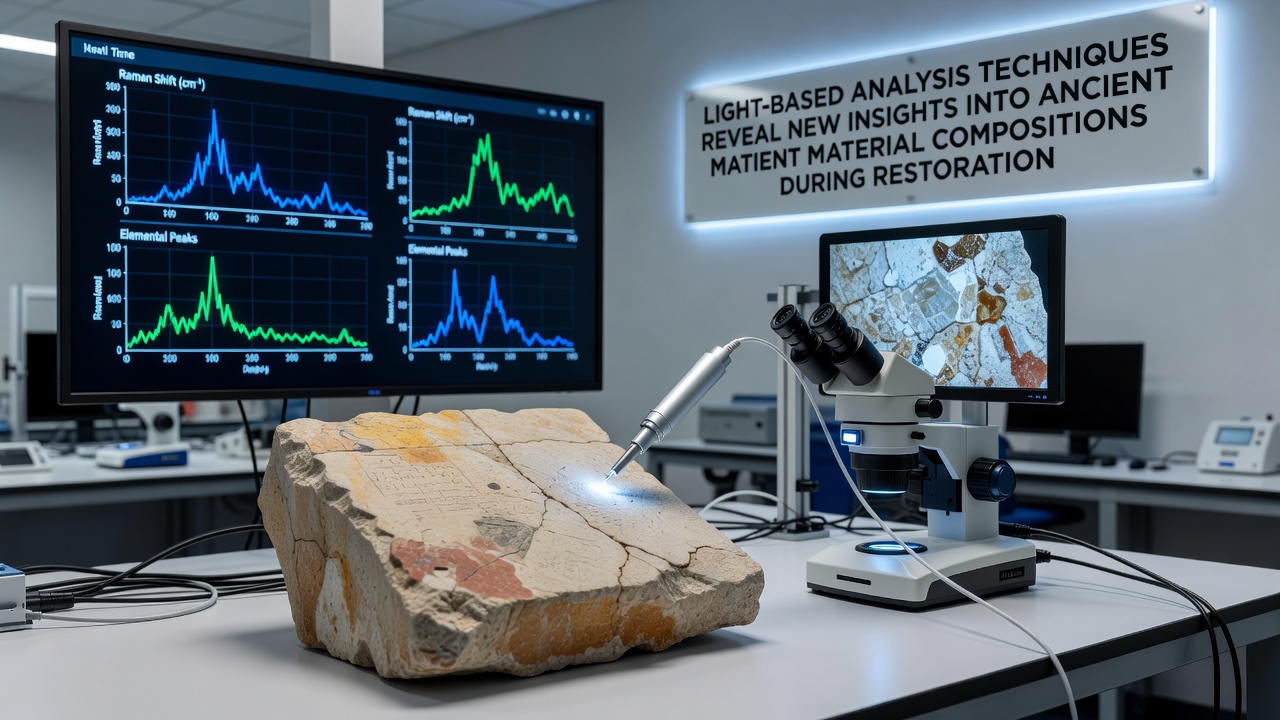
North American laboratories have adopted parallel protocols, and a collaboration between Canadian university optics groups and the Smithsonian Institution produced comparable results on pre-Columbian ceramics earlier this year. Those findings confirmed the presence of previously undocumented manganese-based colorants sourced from distant geological deposits, evidence that supports revised trade-route reconstructions for the period.
Expanding Applications and Training Programs
Training workshops organized through university optics departments now incorporate field modules where participants practice aligning portable spectrometers on actual artifacts under controlled lighting. Programs running through late 2026 emphasize calibration routines that account for ambient humidity and temperature fluctuations, factors that can shift spectral baselines by several nanometers. Graduates of these courses return to their institutions equipped to adapt the techniques for local collections, and several Australian and Japanese teams have already published preliminary results on Buddhist temple murals using equipment loaned through international exchange agreements.
Standards organizations continue to refine measurement protocols, and guidelines released by the European Committee for Standardization specify minimum spectral resolution and sampling intervals for heritage applications. Compliance with these benchmarks allows datasets from different laboratories to be merged reliably, creating larger comparative resources for material provenance studies.
Conclusion
Light-based analysis continues to supply quantitative evidence that refines understanding of ancient manufacturing processes and subsequent interventions. As equipment becomes more compact and data-processing pipelines more automated, additional institutions gain access to these capabilities, and the cumulative record of material compositions grows more detailed each season. Projects completed through October 2026 demonstrate that systematic application of these optical methods yields reproducible insights applicable across geographic regions and artifact types.